Since completing my master's degree, I've had time to spend with my animals, and I realized how removed I had been from everything on the farm. In some ways, I am looking at things through a stranger's eyes. I don't think that's a bad thing. In fact, I remember a friend once telling me her division at work was having a "fresh eyes" audit -- someone from the corporation was coming to check out their operations and see if anything needed to be changed.
I've realized that there are a lot of things that need to be changed. I suppose a lot of homesteaders go through this period. It takes time and experimentation to figure out what you want, what you really need, and what you can realistically handle. In my six years out here, I've seen a lot of people come and go. Houses on small plots of land have for-sale signs for the second time in only three or four years.
The lure of the country is strong. So many people say they'd love to do what we're doing -- live in the country, enjoy the peace and the stars at night, grow their own food. Few people even attempt it, and of those that do, many decide that it's not for them. They miss the instant access to food, entertainment, and even a gallon of milk. When we moved out here six years ago, I realized that what separated us from them was a goal bigger than ourselves. We didn't merely want the quiet existence of farm life or a few animals to decorate our pastures. We'd been vegetarians for 14 years because we did not approve of the confinement practices of modern agriculture. People would ask if we were vegetarians for health or ethical reasons, and we'd say "both." Moving here was an extension of that commitment to not only ourselves, but the world. We also did not approve of the practices of dairy farmers who kept cows confined or egg farmers who debeaked chickens and kept them in small cages. Unfortunately, our few feeble attempts at becoming vegan never lasted more than a few months.
A month before we moved out here, I had ordered my laying hens so that I could divest myself from the Big Ag egg industry as soon as possible. When I learned that chicks needed to stay inside under a heat lamp for a month, I decided that they could just as easily live in our basement in the suburbs, and we would be one month closer to those free-range eggs from happy chickens. I placed a deposit on my first milk goat and bought a milk bucket and cheese cultures. When we moved here in April 2002, we went right to work planning our garden and buying animals that would be our partners in providing us with food that we felt was better, not only for us, but better for the animals and the earth, as well.
Since then we have learned a lot. We have failed many times. Sometimes our mistakes make us laugh, and sometimes they make us cry. But even after our very worst failures, when we feel absolutely defeated, we have never thought about leaving. We know that we just have to try harder and learn more. And in our world where everyone talks about being "in control," we have to accept that there are things beyond our control. In a nation where egocentrism is epidemic, we realize that it is not all about us.
I'm back on the farm now full-time. I can't believe it's been two years since I was here virtually 24/7, but I'm glad to be back. How could I have left the day-to-day operations to my children? Why did I think I wanted or needed a master's degree? I'm not sure anymore. After living with the laws of the farm, the artificial world of academia was a surprising disappointment. I started grad school after being here for four years. Maybe I needed that experience to help me realize how much I love it here. And now I'm looking at everything with fresh eyes, thinking about what I want to change and what needs to be done better. I think I have discovered the definition of passion: The more I do here, the more I want to do and the more I care.
Friday, May 16, 2008


Wednesday, May 7, 2008
"The Year of the Goat"
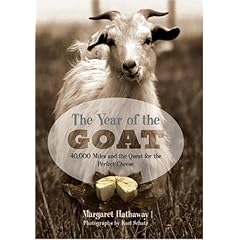
Yesterday I finished grad school, and today I finished reading The Year of the Goat. The book has been sitting on the lower shelf of the table next to my bed since I purchased it in August, and I've read Chapter 14 quite a few times. In the interest of full disclosure, author Margaret Hathaway and photographer Karl Schatz visited us in their travels, and she wrote about their visit to our farm in Chapter 14. Now that I've thought about it, I did take it out a few times over the winter holidays to read Chapter 14 to friends and family who visited us.
Now that I've read the whole book, I can say that I love it. I wish I would have taken their logical approach to homesteading before moving out here. Imagine researching something for a whole year and traveling all around the country before finally deciding if it was right for you. When I bought my first goats, I didn't even know that they were born with horns. I had never even milked a goat. I just knew that I loved goat cheese. But enough about me . . .
Margaret and Karl were bona fide New Yorkers when they decided to set off on a 40,000 mile trip to figure out if they should become homesteaders and goatherds. This book is a travelogue of places they went, the things they learned, and the cheese they ate.
Although I've had goats for six years now, I learned a lot. We have dairy goats, and it was interesting to learn about meat goats and pack goats -- far more interesting to read in Margaret's poetically-conversational style than in a how-to book of raising meat goats or packing with goats.
My favorite part of the whole book was the last 20 pages, in which I got teary-eyed several times. No, I'm not going to tell you what happens in those 20 pages, because (1) I don't want to ruin it for you, and (2) I couldn't do it justice. Margaret's narrative style makes the book what it is -- a lovely work of art.
Sunday, May 4, 2008
Boys will be boys
 I used to hate it when people contributed a boy's bad behavior to his gender, but after living on a farm for just a couple years, I realized where some of those old ideas came from. When it comes to animals, hormones trump everything, and boys will be boys. We already know that several of our turkeys are males, because one started strutting, and then a couple more started to imitate him. The only time females strut is if they are feeling threatened, so it's pretty unlikely that a female turkey would be strutting at this age. If you look at his back end, where he will someday have tail feathers, and you can see that he is even trying to make his tail stand up. I still hate it when people say, "boys will be boys" about humans, because I think we are a bit more sophisticated and intelligent than turkeys.
And Coco finally decided to let us see her lovely kids. She woke me up at 3:35 a.m. on April 30 and gave birth to two huge bucklings about 20 minutes after I arrived in the barn. They were trying to stand within about 10 minutes, and the first one had nursed before he was 30 minutes old. The boys are as big as kids that are a couple weeks old, and they're doing great!
Tuesday, April 29, 2008
Four daddies

Before breakfast, I was in the barn having a talk with Coco about the importance of her giving birth to her kids, rather than keeping them inside forever, and Mike walked in to inform me that we had goslings! Our year-old goose hatched her first gaggle of geese, and they have four daddies.
When I walked out of the barn, I saw the four ganders standing next to the door of the coop where the goose has been setting. The first gosling was standing in the doorway, and a couple more were standing behind it. About half an hour later, seven of the goslings had made their way outside the coop, and the mama goose was standing with them. A eighth gosling was being left behind. When the goose family had traveled about 10 feet away from the coop, Katherine picked up the one left inside and set it down near the others. It flopped on its belly. It's legs stuck out to the side, and it tried again to move forward, but it sort of hopped and flopped. As slowly as the other geese were moving, it wasn't slow enough for Number Eight. Regular blog readers have probably already guessed that #8 is now living in Katherine's bedroom. At two-hours old, he still wasn't standing, so it will be interesting to see how he develops.

I ate my bowl of cereal this morning sitting on the deck, watching the mama goose, the four daddies, and the seven goslings slowly make their way around the yard near the pond. The mama was easy to recognize -- she was the one gobbling grass. Sitting on eggs for four weeks has to be as exhausting as giving birth, perhaps more exhausting, since she hardly eats for all that time. Yes, of course, she does eat, but she only leaves the nest once a day to grab a quick bite and then get back to her eggs before they cool off. The most beautiful part of the whole picture was watching the four daddies, standing as sentinels around the goslings as they explored their new world.
Saturday, April 26, 2008
Waiting for Coco
 When I was in college, I read "Waiting for Godot." I was an English major, and I don't remember who Godot was or why anyone was waiting for him (or her). But now I'm waiting for Coco, the goat whose due date for kidding was Tuesday. I do think she's going to kid soon. Of course, she has to kid soon. She can't be pregnant forever. Maybe I could write a story called, "Waiting for Kids."
Today's picture is one of the babies that was born five weeks ago. Her name is Maly's Streetcar Named Desire. We're calling her Desire. Today she had the honor of being fed her bottle by visitors from Denmark! I can say without a doubt that visiting our farm was the highlight of the trip for the 10-year-old daughter who wanted to take a goat home with her. When someone said that she couldn't take it on the plane, I did not mention that goats can be shipped via plane just like dogs. I imagine her mom appreciated my silence on the subject.
Tuesday, April 22, 2008
Turkeys and goats and gardening
The babies just keep coming -- 29 so far! We now have two babies in the house: the one surviving kid from Beauty and a kid from Anne that didn't want to do anything other than sleep when she was born a week ago. Katherine tried to get her to nurse for two hours, and she would have nothing to do with it. It was as if she was saying, "Just let me sleep." So Katherine finally gave up, brought her in the house, and gave her some of her mommy's colostrum in a bottle. A couple hours after getting the colostrum -- liquid gold -- in her tummy, she woke up and was ready to party.
Now we're waiting for Coco to freshen, and she'll be the last one until the end of May or first of June when we have five more due! But don't think that we're getting a break. With the warm weather, it means that it's time to work in the garden. And Thursday, we're expecting turkey poults!
Now we're waiting for Coco to freshen, and she'll be the last one until the end of May or first of June when we have five more due! But don't think that we're getting a break. With the warm weather, it means that it's time to work in the garden. And Thursday, we're expecting turkey poults!
Saturday, April 12, 2008
More kids
 We've had three does kid in the last 24 hours -- triplets, twins, and a single. Some are boring, like solid black or white, but here's my favorite, at least in the color department. It's out of my master champion Carmen, whose babies are always wonderful in every way. Two of her daughters already earned the junior leg of their permanent championship. I hope this little girl follows in her big sisters' hoof prints! They don't give any points for color, but it's a nice bonus. She's not even a day old in this photo -- and, oh, she has blue eyes.
Wednesday, April 9, 2008
You save some
And you lose some. We were quite hopeful about the little bucks that we brought into the house yesterday. They were eating well, and the little white one had even started walking. But sometime between the 3 a.m. feeding and sunrise, he died. The buckskin is still alive, but he is not very strong. None of these kids weighed even two pounds, and just like human babies, low birth weight is a tough handicap to overcome. But at least we know we've tried. I'm glad we brought them into the house. When milking their mother, we get very little milk, so even if she had been willing to let the boys nurse, they wouldn't have been getting enough. The tiny udder, low production, and lack of mothering instincts makes me think something is wrong with mom hormonally, but what?
Tuesday, April 8, 2008
Cheating death

Life is such an amazing mystery. After writing about Carmen's birth yesterday, I come home last night to learn that another doe gave birth unexpectedly, and the little girl died. She was small and soaking wet when Katherine found her. Only the mouth and nose had been cleaned off by the mother. No doubt she died from hypothermia. The mom had triplets. When people ask me why we have to be at the births, I tell them that 99% of the time we just need to make sure the kids are dried off. It is amazing that something as simple as a towel can be a lifesaver, but it is.
This morning I went out to check on the two boys. The white one was laying alone, and the buckskin was under the heat lamp. I felt their tummies, and they were not full, I gave the mom some alfalfa and stood the kids up under her to nurse. The mom started doing a tap dance moving from side to side as she munched the hay. The white buckling could hardly stand and gave up quickly. The buckskin followed his mom from side to side, but then laid down under the heat lamp to rest. After about 15 minutes, she finally let him have a few sucks. I am not in the mood to have any more goats die, so I decide to take the boys inside and bottle feed them.
That last comment sounds like Twilight Zone fodder, but as I was walking into the house with the kids under my coat, I remembered my experience with Carmen. I had never had a kid so near death, so I called people with more experience. Some had the attitude that if the kid couldn't make it on her own, it wasn't worth saving her. I couldn't just let her die, and this morning, I couldn't let these boys die.
The white kid was already suffering from hypothermia. When I opened his mouth to put the bottle nipple in, I realized his mouth was ice cold. No wonder he had no energy. He was almost dead. I was ecstatic that he could still suck. (Carmen couldn't when I found her, so I had to tube feed her.) Not only could this little guy suck, but he made it quite clear that he was starving! I had warmed up four ounces for the boys, which should have been more than enough for two 12-hour-old kids. The little white one sucked down most of it without stopping. I offered the rest to the buckskin, deciding to give him more after I'd tried to warm up the white one.
As I had done with Carmen and other kids suffering from hypothermia, I put him in warm water -- and I got a surprise. When his lips touched the water, he started drinking it! Although he has no energy for anything else, he knows he needs nourishment and fluids. That's a great sign. I rubbed him in the warm water, and he moved his legs. After about five minutes, his mouth felt a bit warmer, so I lifted him out of the water and wrapped him in a towel with only his nose sticking out. I got the heating pad and plugged it in. I placed him on it and covered him with the towel. I was constantly checking his temperature, because I don't want him to get overheated. When his mouth was only cool, I uncovered him. I'm hoping that between feeding and laying on the heating pad, he will warm up and totally come back to life.
I hate to ever say anything about whether or not I think a kid will make it. I've lost some, and I've saved some that were in worse shape than this little boy. I am guardedly optimistic, hoping that when I get home tonight, I'll be met by a pair of bouncing baby goats in my living room.
Monday, April 7, 2008
Death and life
We decided to have the vet put Addy down on Saturday, March 29. It was a hard decision to make, but I appreciate everyone's comments. It made it a little easier. One side of me felt that I had to do everything to save her, but the other side of me felt that it would be wrong to put her through all sorts of medical procedures to extend her life a few months. We buried her in the front yard, and I'm going to buy an evergreen to plant above her grave. I was terribly distracted for several days and kept thinking about doing things for her -- feed her, let her outside to potty -- before remembering that she was gone.
Of course, life on the farm slows down for no one. In the midst of all this, we found a dead lamb in the pasture. It looked like a perfectly beautiful, fluffy white ram, so we have no idea why it died. It was probably only a few hours old. I wasn't particularly sad when my husband told me he'd found the ram. Obviously it was sad to learn that the little guy had died before he even had much of a chance at life, and I wondered if we would have been able to help him if we'd found him sooner. But since I didn't know him personally yet, I didn't have the profound sense of loss that I had with Addy.
Then I realized that our relationships with people and animals have a lot in common. Sometimes, friends ask how I can handle it when animals die, since we face it so much more often than people who don't live on a farm. I always felt kind of weird telling them that you don't get too sad most of the time. Why don't we usually get sad? I should have realized that -- just like when people die -- how you respond to an animal's death is totally dependent upon the relationship you had with them. Many year ago when we lived in Florida, a neighbor died. I wasn't particularly sad because I hardly knew her. I think a lot of our animals are kind of like that neighbor. I see them almost daily, but we don't have much of a relationship.
There are other animals, however, that are like Addy. You have a relationship with them. You have shared special times, and you are close to them. When my goat Dancy died, I was devastated. I cried for days whenever I thought of her. I fell in love with her from the moment I brought her home and was convinced there was something terribly wrong with her -- why would anyone sell such a wonderful goat? I had her tested for every goat disease imaginable, and it all came back negative. Why didn't her three previous owners realize what a gem they had? I'll never forget the day that I was a little late milking, and Dancy somehow got out of the pasture, walked up to the kitchen door and called me! I got the milk bucket, and when I walked outside she followed me back to the barn and jumped up on the milkstand! For that reason (and many others), I called her Dancy Darlin, and I still cry when I think about her -- like right now!
When her daughter Carmen dies, I'm sure I'll be equally devastated. Although Dancy gave birth to Carmen, the little gold and white doeling became my baby immediately. I found her soaking wet, ice cold, almost dead in the straw only minutes after she was born. Her brothers, who were twice her size, were already nursing when I walked into the stall and almost stepped on the tiny little doeling. Dancy probably thought she was dead. Carmen became my first house goat, and I knew I'd never be able to let her go, even accepting the fact that she'd probably be a tiny little runt forever. She fooled all of us, however, when she grew up to be a beautiful girl. She's my first home-grown master champion, and she has even earned her advanced registry milk star -- again our first goat to accomplish that goal. She and I have shared so much together, both good and bad. I hope she is with me for many, many more years.
Of course, life on the farm slows down for no one. In the midst of all this, we found a dead lamb in the pasture. It looked like a perfectly beautiful, fluffy white ram, so we have no idea why it died. It was probably only a few hours old. I wasn't particularly sad when my husband told me he'd found the ram. Obviously it was sad to learn that the little guy had died before he even had much of a chance at life, and I wondered if we would have been able to help him if we'd found him sooner. But since I didn't know him personally yet, I didn't have the profound sense of loss that I had with Addy.
Then I realized that our relationships with people and animals have a lot in common. Sometimes, friends ask how I can handle it when animals die, since we face it so much more often than people who don't live on a farm. I always felt kind of weird telling them that you don't get too sad most of the time. Why don't we usually get sad? I should have realized that -- just like when people die -- how you respond to an animal's death is totally dependent upon the relationship you had with them. Many year ago when we lived in Florida, a neighbor died. I wasn't particularly sad because I hardly knew her. I think a lot of our animals are kind of like that neighbor. I see them almost daily, but we don't have much of a relationship.
There are other animals, however, that are like Addy. You have a relationship with them. You have shared special times, and you are close to them. When my goat Dancy died, I was devastated. I cried for days whenever I thought of her. I fell in love with her from the moment I brought her home and was convinced there was something terribly wrong with her -- why would anyone sell such a wonderful goat? I had her tested for every goat disease imaginable, and it all came back negative. Why didn't her three previous owners realize what a gem they had? I'll never forget the day that I was a little late milking, and Dancy somehow got out of the pasture, walked up to the kitchen door and called me! I got the milk bucket, and when I walked outside she followed me back to the barn and jumped up on the milkstand! For that reason (and many others), I called her Dancy Darlin, and I still cry when I think about her -- like right now!
When her daughter Carmen dies, I'm sure I'll be equally devastated. Although Dancy gave birth to Carmen, the little gold and white doeling became my baby immediately. I found her soaking wet, ice cold, almost dead in the straw only minutes after she was born. Her brothers, who were twice her size, were already nursing when I walked into the stall and almost stepped on the tiny little doeling. Dancy probably thought she was dead. Carmen became my first house goat, and I knew I'd never be able to let her go, even accepting the fact that she'd probably be a tiny little runt forever. She fooled all of us, however, when she grew up to be a beautiful girl. She's my first home-grown master champion, and she has even earned her advanced registry milk star -- again our first goat to accomplish that goal. She and I have shared so much together, both good and bad. I hope she is with me for many, many more years.
Subscribe to:
Posts (Atom)
LinkWithin
